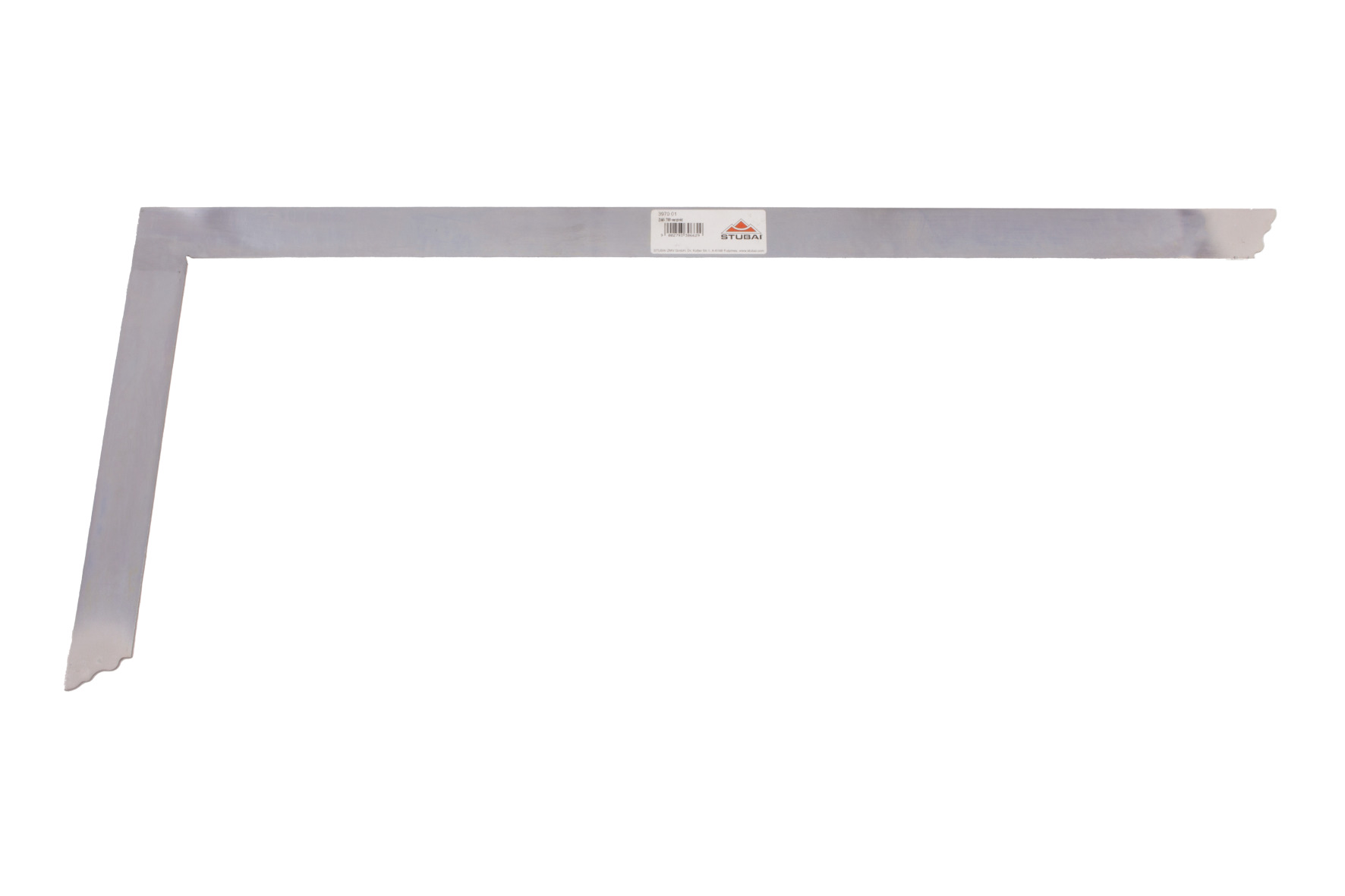
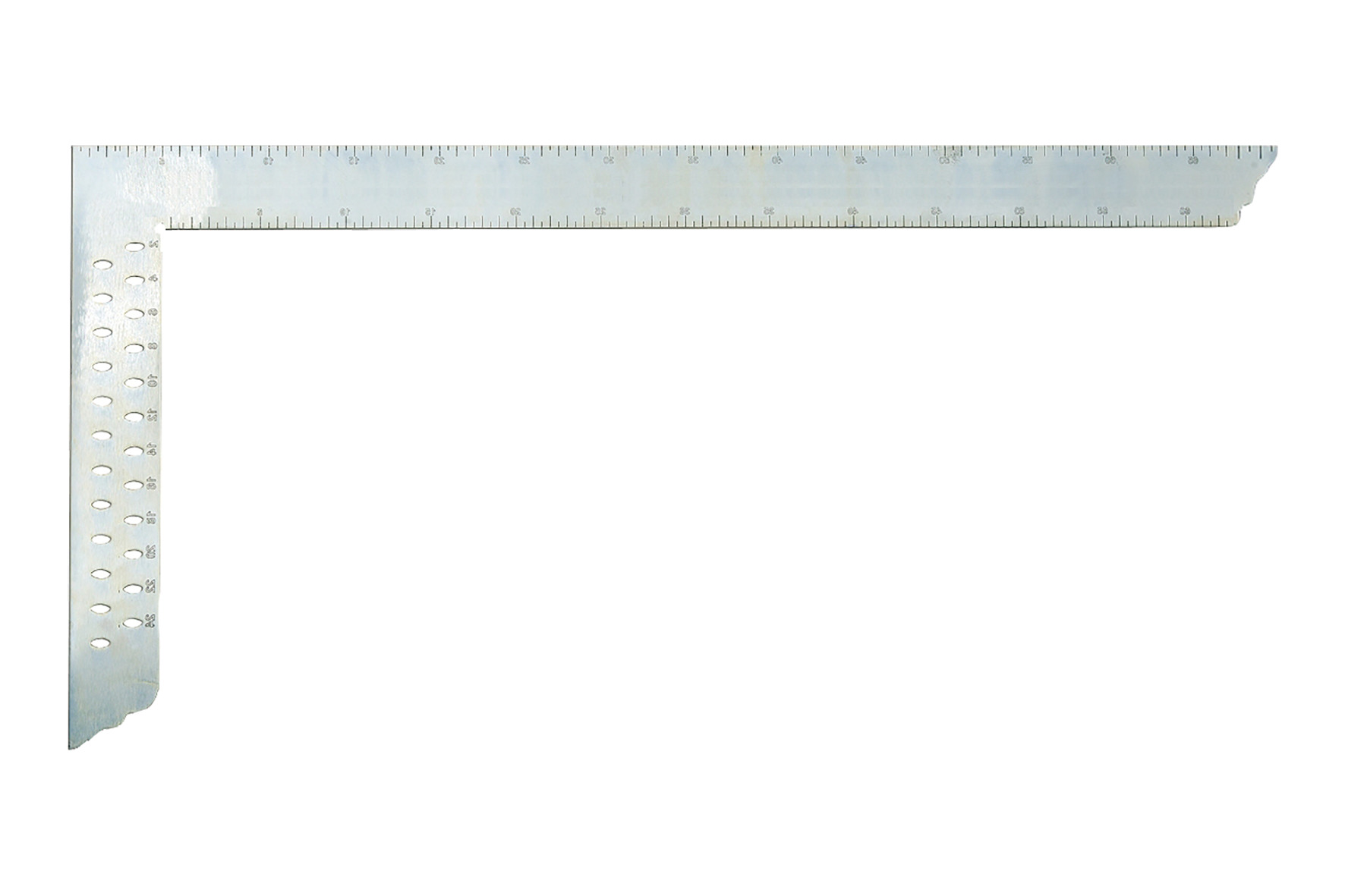
3981 Carpenter’s square with marking holes
With graduation and marking holes, high quality spring steel, galvanized, polished, tempered, high angular accuracy, precision grinding, width 40/50 mm, allows a smooth bearing surface, but-welded, precision: +/- 0,057°.
| Item No | Designation | Weight | Length | Width | Stock width |
|---|---|---|---|---|---|
| 398106 | Carpenter's square with marking holes 40 mm/600 mm | 340 g | 600 mm | 300 mm | 40 mm |
| 398107 | Carpenter's square with marking holes 40 mm/700 mm | 400 g | 700 mm | 350 mm | 50 mm |
Manufacturer information (GPSR)
MANUFACTURER ACCORDING TO THE EU GENERAL PRODUCT SAFETY REGULATION (GPSR)
STUBAI ZMV GmbH
Dr. Kofler Straße 1
A-6166 Fulpmes
Phone: +43 5225 6960 211
Email: office@stubai.com
Safety Instructions for Measuring Tools
General Information:
• Suitable tool: Always use the tool specifically designed for the respective task. Using an unsuitable tool increases the risk of accidents and can make the work more difficult.
• Measuring tools may only be used by persons with limited physical, sensory or mental abilities, or lacking experience and/or knowledge, if they are supervised by a person responsible for their safety, have received instructions on how to use measuring tools, and have understood the resulting hazards.
• Children may only use measuring tools if they are over 8 years old and are supervised by a person responsible for their safety, have received instructions on how to use measuring tools, and have understood the resulting hazards.
• Keep packaging films away from children; risk of suffocation!
Intended Use:
• Safety is only ensured when the tool is used as intended. Use measuring tools exclusively for their designated purpose. Incorrect use may lead to tool breakage and injuries.
• Ensure precision: Regularly check the accuracy of the measuring tool, especially when using digital or analogue devices, to avoid incorrect measurements.
Improper Use:
• Use as a lever (e.g. with mitre squares) or as a securing device (e.g. with tape measures) is not permitted.
Inspection Before Use:
• Ensure integrity: Check measuring tools before each use for damage such as cracks, loose parts or rust.
• Do not use damaged measuring tools: Defective measuring tools must not be used and must be taken out of service immediately.
Specific Instructions for Measuring Tools:
• Squares (e.g. mitre squares):
o Secure grip: Hold square tools with a firm grip and ensure they do not slip during measurement. When working with machines, a secure hold is essential.
o Avoid damage: Protect the square from extreme impacts or pressure to prevent distortion and inaccurate measurements.
o Correct application: Ensure the square is placed correctly on the surface and perform the measurement slowly and carefully to avoid incorrect results.
• Rulers and tape measures:
o Consider material selection: Use rulers and tape measures according to their material properties. For example, steel tape measures are more robust and suitable for heavy-duty work, while plastic tape measures are more flexible but less durable.
o Repeated measurements: Perform multiple measurements to confirm accuracy, especially over long distances. Slight stretching of the tape can distort the measurement.
o Proper storage: Store tape measures and rulers so they are not bent or damaged. Always rewind tape measures carefully to avoid twisting.
o Condition of the tape: Regularly check the markings on tape measures and rulers, as they may wear over time and affect measurement accuracy.
Maintenance, Care and Storage:
• Cleaning after use: After each use, measuring tools must be thoroughly cleaned to remove residues such as paint, plaster or mortar. Dry the tool well to prevent rust formation.
• Rust protection: Protect metal parts of the tools from moisture to prevent rust. Apply rust protection products if necessary.
• Storage: Store measuring tools out of reach of children and persons with limited physical, sensory or mental abilities, in a safe, dry place such as a toolbox or tool wall to prevent accidents and damage.
Special Notes:
• Avoid improvisation: Use measuring tools exclusively for their intended purpose. Using tools for unsuitable applications may lead to tool breakage or injuries.
• Transport: Ensure that measuring tools are securely fastened during transport and that sharp edges are protected to avoid injuries.
This text has been partially translated with the support of AI technology.
STUBAI ZMV GmbH
Dr. Kofler Straße 1
A-6166 Fulpmes
Phone: +43 5225 6960 211
Email: office@stubai.com
Safety Instructions for Measuring Tools
General Information:
• Suitable tool: Always use the tool specifically designed for the respective task. Using an unsuitable tool increases the risk of accidents and can make the work more difficult.
• Measuring tools may only be used by persons with limited physical, sensory or mental abilities, or lacking experience and/or knowledge, if they are supervised by a person responsible for their safety, have received instructions on how to use measuring tools, and have understood the resulting hazards.
• Children may only use measuring tools if they are over 8 years old and are supervised by a person responsible for their safety, have received instructions on how to use measuring tools, and have understood the resulting hazards.
• Keep packaging films away from children; risk of suffocation!
Intended Use:
• Safety is only ensured when the tool is used as intended. Use measuring tools exclusively for their designated purpose. Incorrect use may lead to tool breakage and injuries.
• Ensure precision: Regularly check the accuracy of the measuring tool, especially when using digital or analogue devices, to avoid incorrect measurements.
Improper Use:
• Use as a lever (e.g. with mitre squares) or as a securing device (e.g. with tape measures) is not permitted.
Inspection Before Use:
• Ensure integrity: Check measuring tools before each use for damage such as cracks, loose parts or rust.
• Do not use damaged measuring tools: Defective measuring tools must not be used and must be taken out of service immediately.
Specific Instructions for Measuring Tools:
• Squares (e.g. mitre squares):
o Secure grip: Hold square tools with a firm grip and ensure they do not slip during measurement. When working with machines, a secure hold is essential.
o Avoid damage: Protect the square from extreme impacts or pressure to prevent distortion and inaccurate measurements.
o Correct application: Ensure the square is placed correctly on the surface and perform the measurement slowly and carefully to avoid incorrect results.
• Rulers and tape measures:
o Consider material selection: Use rulers and tape measures according to their material properties. For example, steel tape measures are more robust and suitable for heavy-duty work, while plastic tape measures are more flexible but less durable.
o Repeated measurements: Perform multiple measurements to confirm accuracy, especially over long distances. Slight stretching of the tape can distort the measurement.
o Proper storage: Store tape measures and rulers so they are not bent or damaged. Always rewind tape measures carefully to avoid twisting.
o Condition of the tape: Regularly check the markings on tape measures and rulers, as they may wear over time and affect measurement accuracy.
Maintenance, Care and Storage:
• Cleaning after use: After each use, measuring tools must be thoroughly cleaned to remove residues such as paint, plaster or mortar. Dry the tool well to prevent rust formation.
• Rust protection: Protect metal parts of the tools from moisture to prevent rust. Apply rust protection products if necessary.
• Storage: Store measuring tools out of reach of children and persons with limited physical, sensory or mental abilities, in a safe, dry place such as a toolbox or tool wall to prevent accidents and damage.
Special Notes:
• Avoid improvisation: Use measuring tools exclusively for their intended purpose. Using tools for unsuitable applications may lead to tool breakage or injuries.
• Transport: Ensure that measuring tools are securely fastened during transport and that sharp edges are protected to avoid injuries.
This text has been partially translated with the support of AI technology.