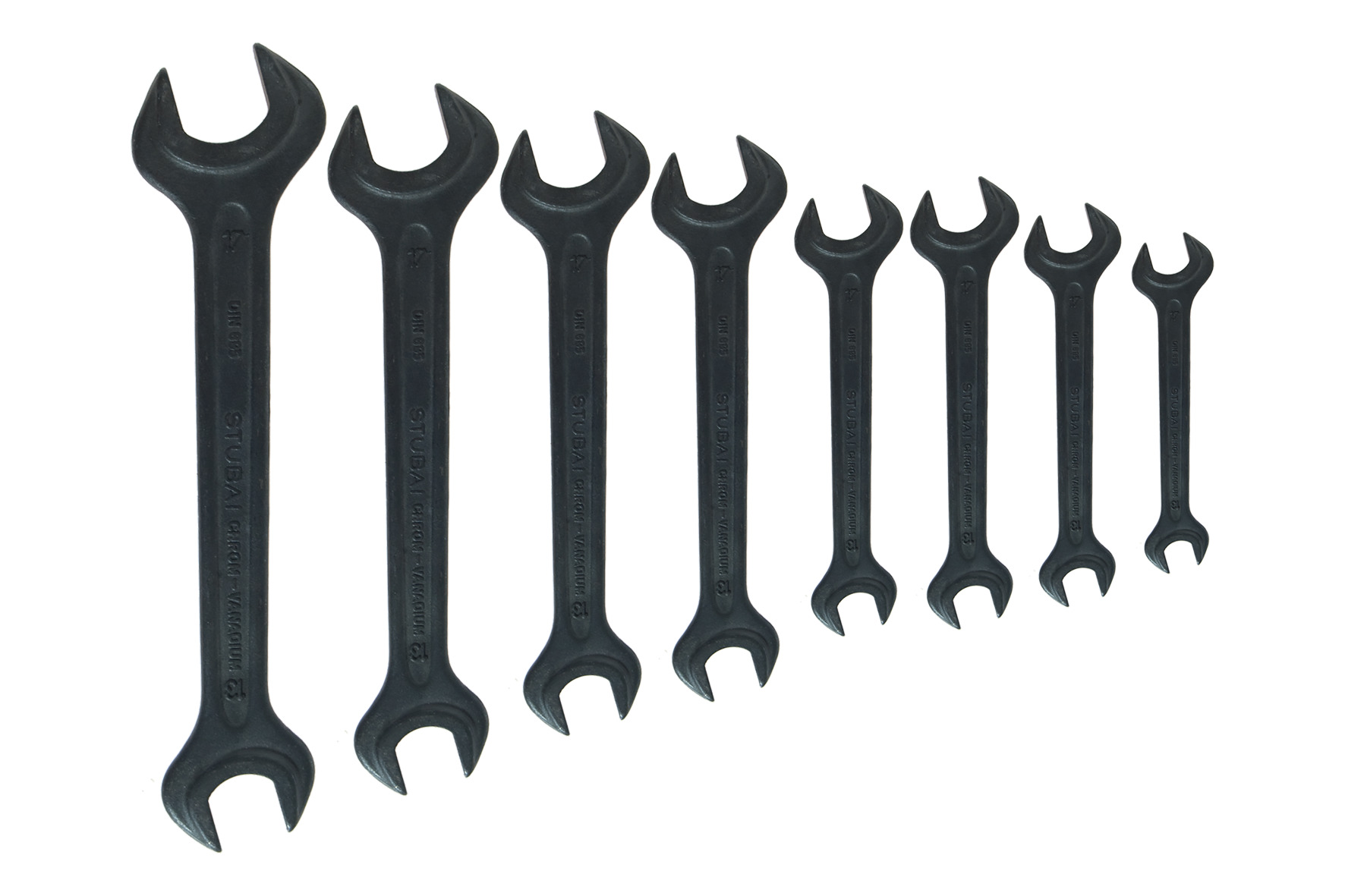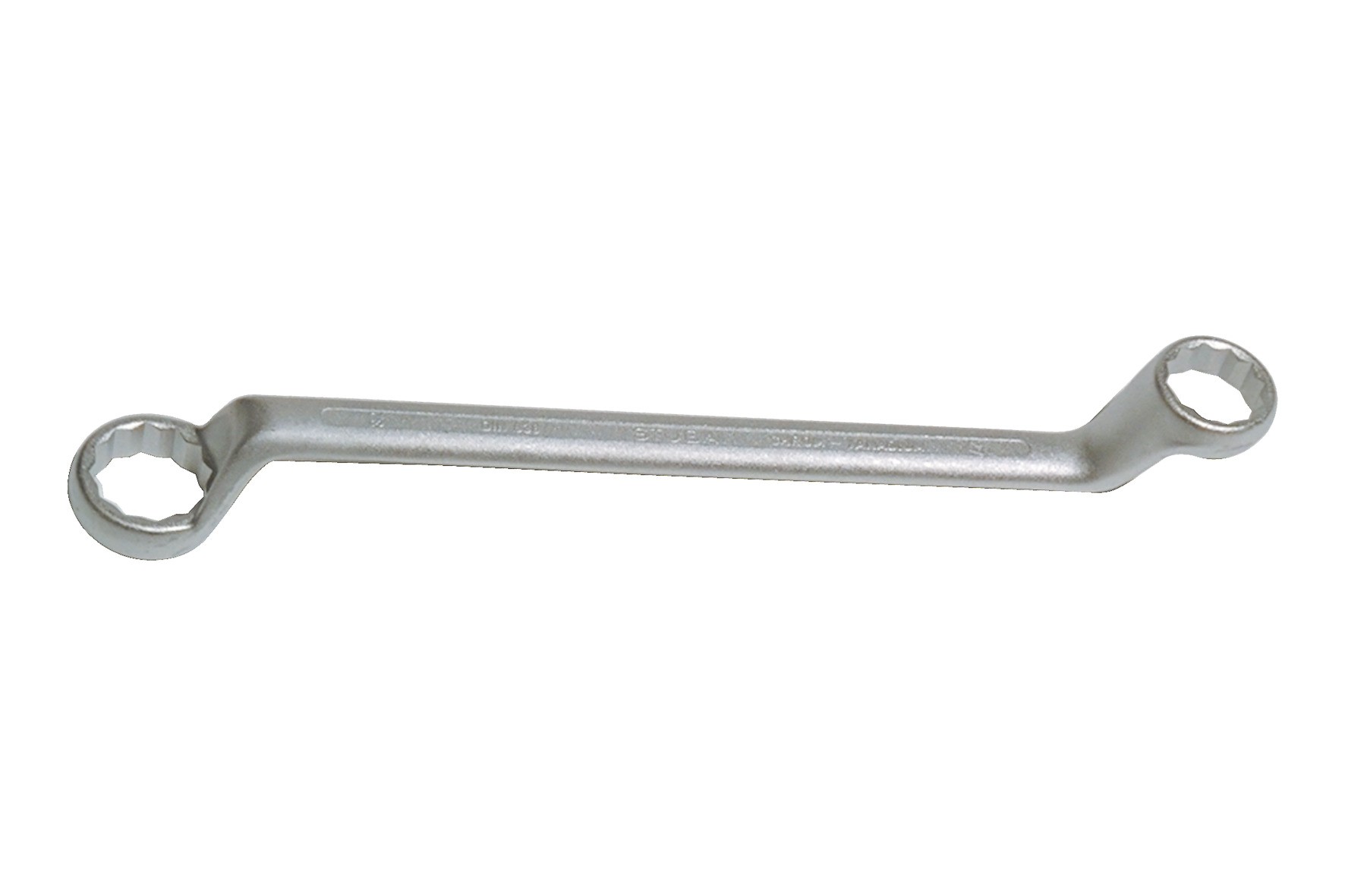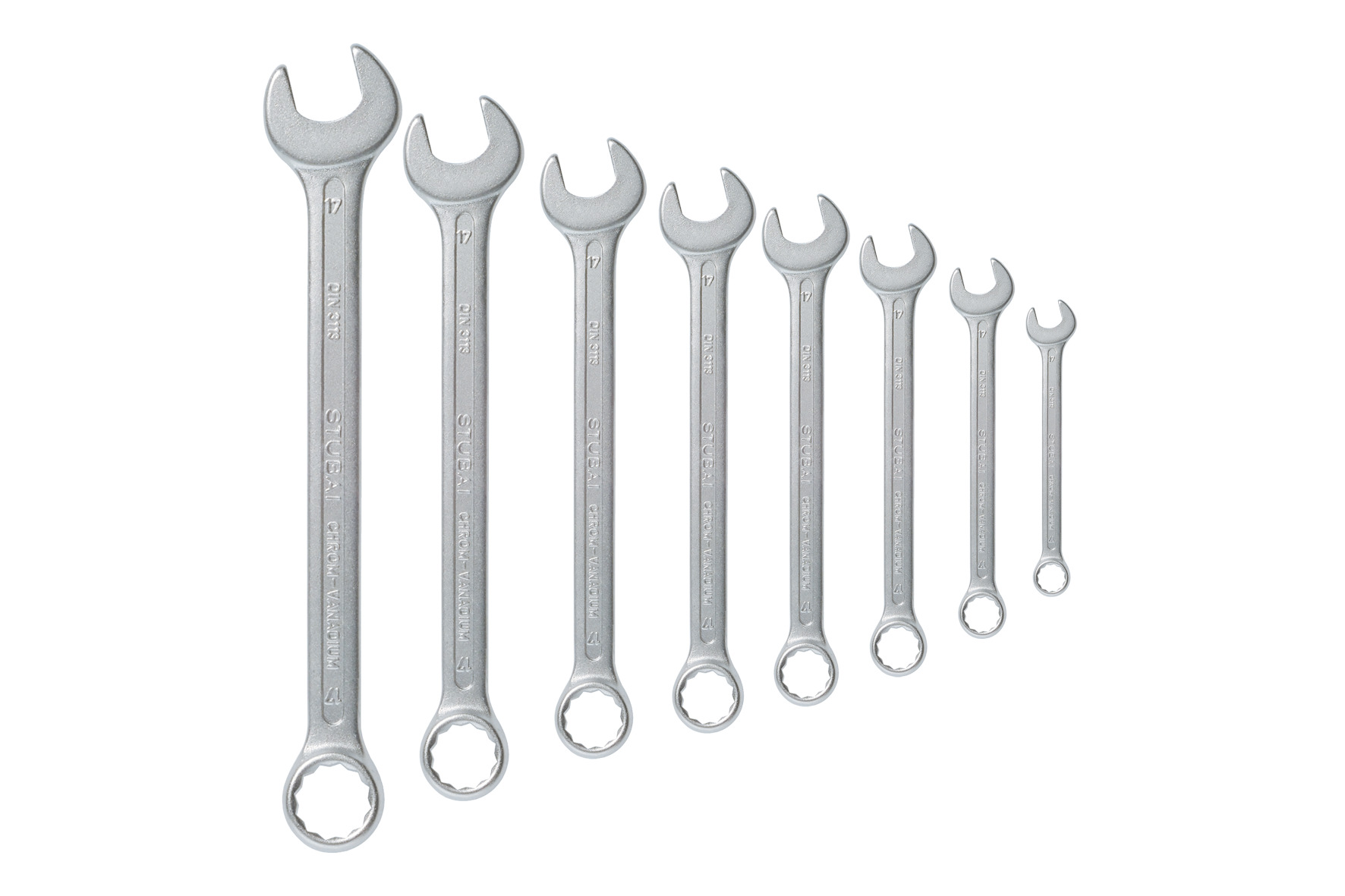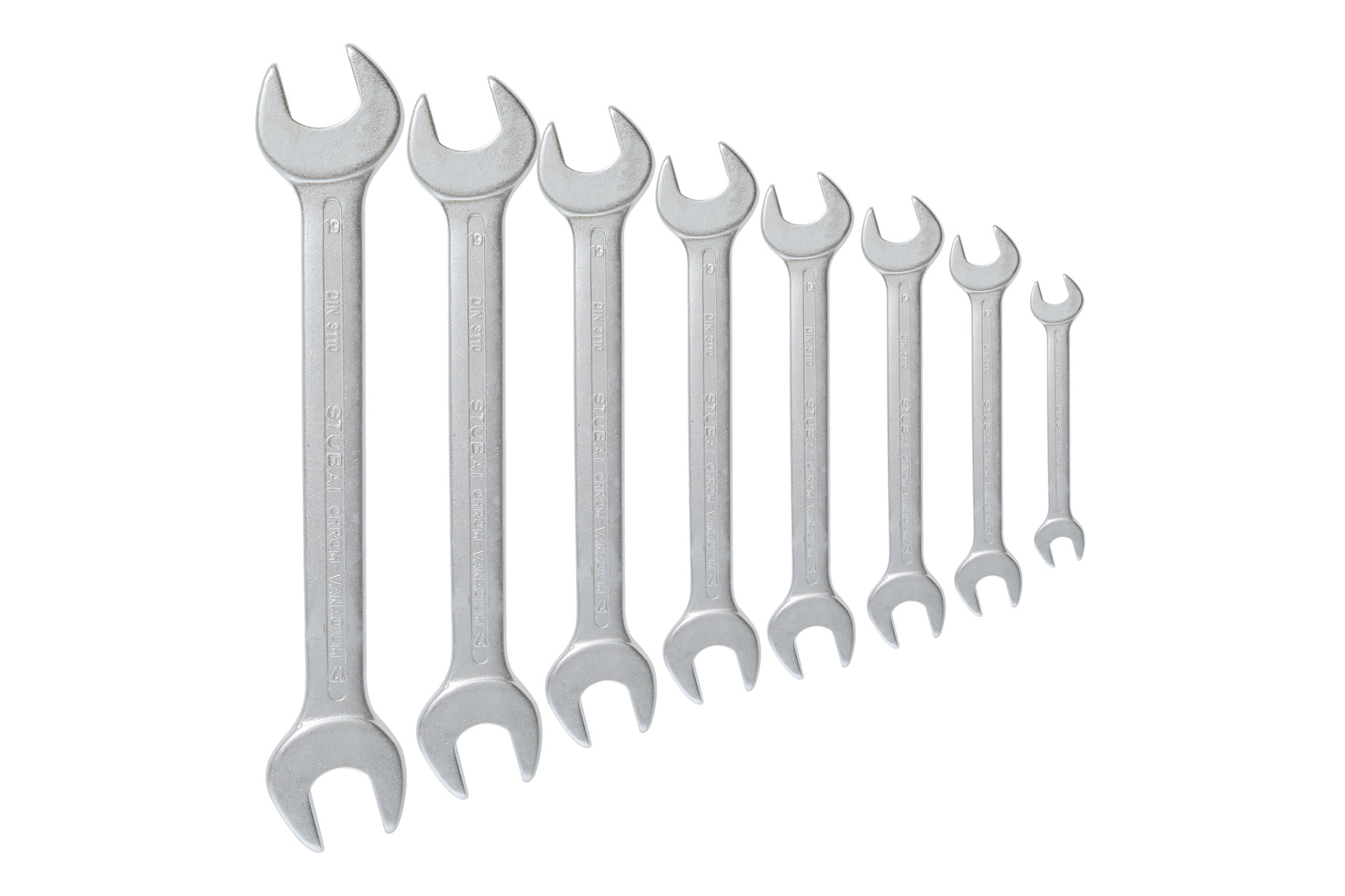
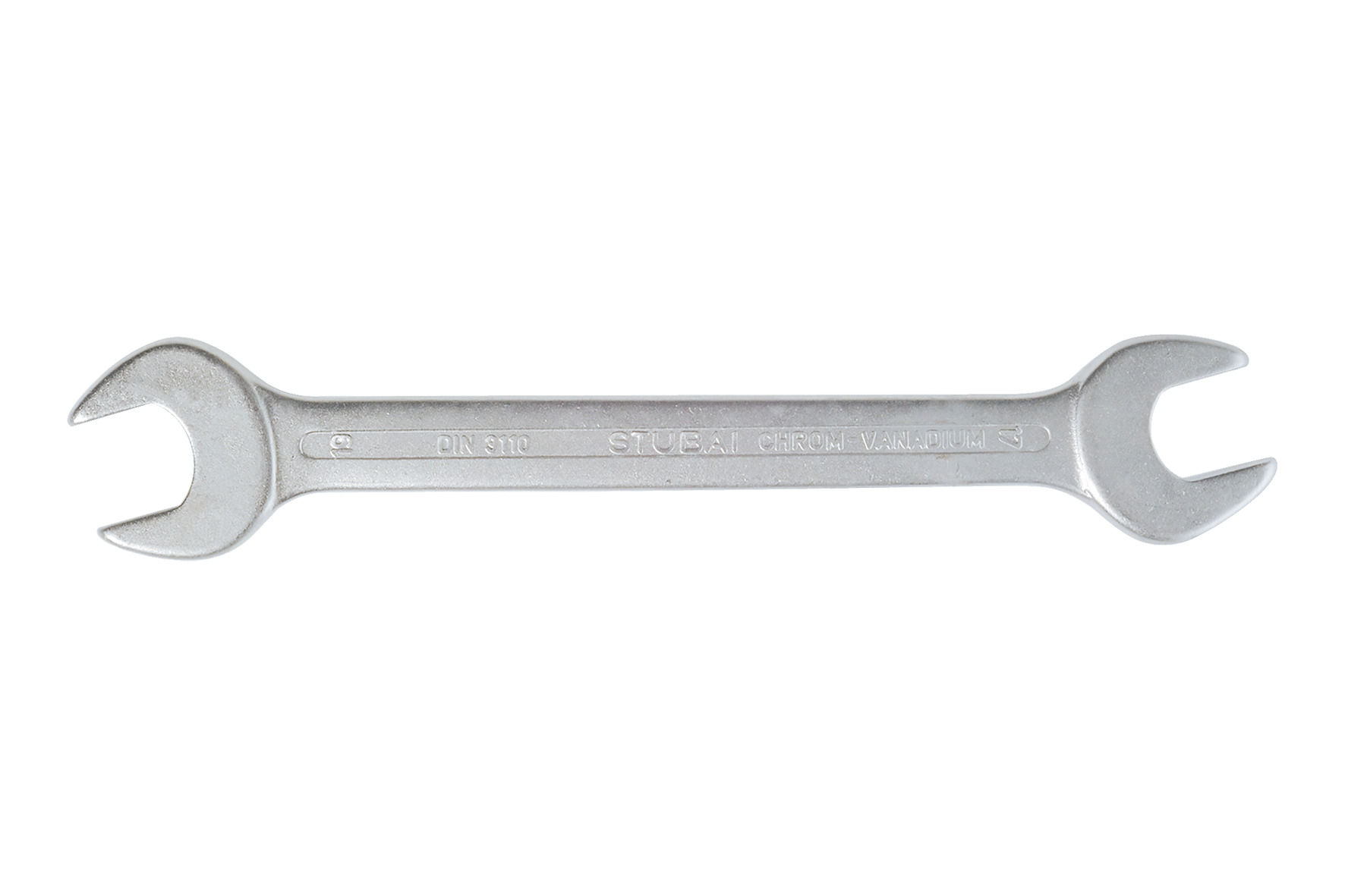
2010 Double open-ended wrench
Chrome-vanadium-steel, 31 CrV3, chrome-plated.
| A1 | B1 | B2 | Item No | Designation | Standard | Weight | Length | Wrench size | Wrench size 2 |
|---|---|---|---|---|---|---|---|---|---|
| 3.7 mm | 17.5 mm | 18.5 mm | 20100607 | Double open-ended wrench 6x7 mm | DIN 3110, ISO 3318-1085 | 30 g | 122 mm | 6 mm | 7 mm |
| 4 mm | 21.5 mm | 24.5 mm | 20100810 | Double open-ended wrench 8x10 mm | DIN 3110, ISO 3318-1085 | 40 g | 140 mm | 8 mm | 10 mm |
| 4 mm | 21.5 mm | 23.5 mm | 20100809 | Double open-ended wrench 8x9 mm | DIN 3110, ISO 3318-1085 | 40 g | 140 mm | 8 mm | 9 mm |
| 4.5 mm | 24.5 mm | 27.5 mm | 20101011 | Double open-ended wrench 10x11 mm | DIN 3110, ISO 3318-1085 | 60 g | 157 mm | 10 mm | 11 mm |
| 5 mm | 29 mm | 31.1 mm | 20101213 | Double open-ended wrench 12x13 mm | DIN 3110, ISO 3318-1085 | 70 g | 172 mm | 12 mm | 13 mm |
| 5 mm | 29 mm | 33 mm | 20101214 | Double open-ended wrench 12x14 mm | DIN 3110, ISO 3318-1085 | 80 g | 172 mm | 12 mm | 14 mm |
| 5.5 mm | 31.5 mm | 35.5 mm | 20101315 | Double open-ended wrench 13x15 mm | DIN 3110, ISO 3318-1085 | 110 g | 190 mm | 13 mm | 15 mm |
| 6 mm | 31.5 mm | 39.5 mm | 20101317 | Double open-ended wrench 13x17 mm | DIN 3110, ISO 3318-1085 | 130 g | 205 mm | 13 mm | 17 mm |
| 5.5 mm | 33 mm | 35.5 mm | 20101415 | Double open-ended wrench 14x15 mm | DIN 3110, ISO 3318-1085 | 100 g | 190 mm | 14 mm | 15 mm |
| 6 mm | 36.5 mm | 39.5 mm | 20101617 | Double open-ended wrench 16x17 mm | DIN 3110, ISO 3318-1085 | 130 g | 205 mm | 16 mm | 17 mm |
| 6.5 mm | 39.5 mm | 44 mm | 20101719 | Double open-ended wrench 17x19 mm | DIN 3110, ISO 3318-1085 | 170 g | 222 mm | 17 mm | 19 mm |
| 6.5 mm | 41.5 mm | 44 mm | 20101819 | Double open-ended wrench 18x19 mm | DIN 3110, ISO 3318-1085 | 180 g | 222 mm | 18 mm | 19 mm |
| 7 mm | 45.5 mm | 49.5 mm | 20102022 | Double open-ended wrench 20x22 mm | DIN 3110, ISO 3318-1085 | 220 g | 236 mm | 20 mm | 22 mm |
| 7.5 mm | 47 mm | 51 mm | 20102123 | Double open-ended wrench 21x23 mm | DIN 3110, ISO 3318-1085 | 250 g | 250 mm | 21 mm | 23 mm |
| 7.5 mm | 49.5 mm | 54.5 mm | 20102224 | Double open-ended wrench 22x24 mm | DIN 3110, ISO 3318-1085 | 250 g | 250 mm | 22 mm | 24 mm |
| 8 mm | 54.5 mm | 57.5 mm | 20102426 | Double open-ended wrench 24x26 mm | DIN 3110, ISO 3318-1085 | 330 g | 266 mm | 24 mm | 26 mm |
| 8 mm | 54.5 mm | 61 mm | 20102427 | Double open-ended wrench 24x27 mm | DIN 3110, ISO 3318-1085 | 330 g | 266 mm | 24 mm | 27 mm |
| 8.5 mm | 56 mm | 61 mm | 20102528 | Double open-ended wrench 25x28 mm | DIN 3110, ISO 3318-1085 | 350 g | 280 mm | 25 mm | 28 mm |
| 9 mm | 61 mm | 69 mm | 20102732 | Double open-ended wrench 27x32 mm | DIN 3110, ISO 3318-1085 | 520 g | 302 mm | 27 mm | 32 mm |
| 9 mm | 65.5 mm | 69 mm | 20103032 | Double open-ended wrench 30x32 mm | DIN 3110, ISO 3318-1085 | 500 g | 302 mm | 30 mm | 32 mm |
| 9.4 mm | 69 mm | 77 mm | 20103236 | Double open-ended wrench 32x36 mm | DIN 3110, ISO 3318-1085 | 650 g | 302 mm | 32 mm | 36 mm |
| 9.4 mm | 75 mm | 77 mm | 20103436 | Double open-ended wrench 34x36 mm | DIN 3110, ISO 3318-1085 | 590 g | 328 mm | 34 mm | 36 mm |
| 10 mm | 77 mm | 85 mm | 20103641 | Double open-ended wrench 36x41 mm | DIN 3110, ISO 3318-1085 | 760 g | 360 mm | 36 mm | 41 mm |
Manufacturer information (GPSR)
MANUFACTURER ACCORDING TO THE EU GENERAL PRODUCT SAFETY REGULATION (GPSR)
STUBAI ZMV GmbH
Dr. Kofler Straße 1
A-6166 Fulpmes
Phone: +43 5225 6960 211
Email: office@stubai.com
Safety Instructions for Wrenches
General Information:
• Partially subject to standards DIN 895, ISO 3318-1085 or DIN 3110, ISO 3318-1085 or DIN 3113A, ISO 3318-1085 or DIN 837A, ISO 3318-1085 or DIN 838, ISO 3318-1085 or DIN 896A, ISO 2236-1085 or DIN 691, ISO 1711 or DIN 3119 or DIN 895 or DIN 3110 or DIN 3113A or DIN 838.
• Suitable tool: Always use the tool specifically designed for the respective task. Using an unsuitable tool increases the risk of accidents and can make the work more difficult.
• Wrenches may only be used by persons with limited physical, sensory or mental abilities, or lacking experience and/or knowledge, if they are supervised by a person responsible for their safety, have received instructions on how to use wrenches, and have understood the resulting hazards.
• Children may only use wrenches if they are over 8 years old and are supervised by a person responsible for their safety, have received instructions on how to use wrenches, and have understood the resulting hazards.
• Keep packaging films away from children; risk of suffocation!
Intended Use:
• Safety is only ensured when the tool is used as intended. Use the tool exclusively for its designated purpose. Incorrect use may lead to tool breakage and injuries.
• Size and compatibility: Ensure that the wrench fits the screw or nut exactly. Using the wrong wrench may cause slipping and damage to the workpiece or the tool.
Improper Use:
• Use as a lever or chisel is not permitted.
Inspection Before Use:
• Ensure tool integrity: Check all wrenches before use for visible damage such as cracks in the handle, bent jaws, breaks or loose parts.
• Do not use damaged wrenches: Defective wrenches must not be used, as they increase the risk of accidents.
Personal Protective Equipment:
• Wear safety goggles: Use safety goggles to protect yourself from chipping material.
• Hand protection: Wear robust work gloves that provide a secure grip and protect against skin injuries.
• Safety footwear: Wear safety shoes with a metal or plastic toe cap to protect your toes.
Specific Safety Instructions During Use:
• Use the correct tool: Always use the appropriate wrench for the specific screw or nut. An unsuitable wrench may damage both the tool and the component.
• Ensure secure seating: Make sure the wrench sits firmly and securely on the screw or nut to avoid slipping and related injuries.
• Correct turning technique: Apply the wrench correctly and use even force. Excessive pressure may damage the tool or the workpiece.
• Control torque: Ensure that the applied torque is not too high, as overtightening may cause material damage or tool breakage.
• Handle the tool safely: Wrenches should be used with a secure grip and proper control. Slipping or uncontrolled turning may lead to injuries.
• Avoid overloading: Do not use wrenches for tasks they are not designed for. Overloading may damage the tool or the screw/nut.
Maintenance, Care and Storage:
• Regular inspection: Ensure that the wrench functions properly and is not bent or damaged. A damaged wrench may impair work and increase the risk of accidents.
• Cleaning after use: Clean wrenches regularly to remove dirt, rust or oil residues and maintain functionality.
• Rust protection: Protect metal parts from moisture to prevent rust. Apply rust protection if necessary.
• Storage: Store wrenches out of reach of children and persons with limited physical, sensory or mental abilities, in a safe, dry place such as a toolbox or tool wall to prevent accidents and damage.
Special Notes:
• Avoid using as a lever: Do not use wrenches as levers to generate additional torque unless explicitly intended. Excessive leverage may damage the tool or the component.
• Transport: Ensure that wrenches are securely packed during transport to avoid injuries.
This text has been partially translated with the support of AI technology.
STUBAI ZMV GmbH
Dr. Kofler Straße 1
A-6166 Fulpmes
Phone: +43 5225 6960 211
Email: office@stubai.com
Safety Instructions for Wrenches
General Information:
• Partially subject to standards DIN 895, ISO 3318-1085 or DIN 3110, ISO 3318-1085 or DIN 3113A, ISO 3318-1085 or DIN 837A, ISO 3318-1085 or DIN 838, ISO 3318-1085 or DIN 896A, ISO 2236-1085 or DIN 691, ISO 1711 or DIN 3119 or DIN 895 or DIN 3110 or DIN 3113A or DIN 838.
• Suitable tool: Always use the tool specifically designed for the respective task. Using an unsuitable tool increases the risk of accidents and can make the work more difficult.
• Wrenches may only be used by persons with limited physical, sensory or mental abilities, or lacking experience and/or knowledge, if they are supervised by a person responsible for their safety, have received instructions on how to use wrenches, and have understood the resulting hazards.
• Children may only use wrenches if they are over 8 years old and are supervised by a person responsible for their safety, have received instructions on how to use wrenches, and have understood the resulting hazards.
• Keep packaging films away from children; risk of suffocation!
Intended Use:
• Safety is only ensured when the tool is used as intended. Use the tool exclusively for its designated purpose. Incorrect use may lead to tool breakage and injuries.
• Size and compatibility: Ensure that the wrench fits the screw or nut exactly. Using the wrong wrench may cause slipping and damage to the workpiece or the tool.
Improper Use:
• Use as a lever or chisel is not permitted.
Inspection Before Use:
• Ensure tool integrity: Check all wrenches before use for visible damage such as cracks in the handle, bent jaws, breaks or loose parts.
• Do not use damaged wrenches: Defective wrenches must not be used, as they increase the risk of accidents.
Personal Protective Equipment:
• Wear safety goggles: Use safety goggles to protect yourself from chipping material.
• Hand protection: Wear robust work gloves that provide a secure grip and protect against skin injuries.
• Safety footwear: Wear safety shoes with a metal or plastic toe cap to protect your toes.
Specific Safety Instructions During Use:
• Use the correct tool: Always use the appropriate wrench for the specific screw or nut. An unsuitable wrench may damage both the tool and the component.
• Ensure secure seating: Make sure the wrench sits firmly and securely on the screw or nut to avoid slipping and related injuries.
• Correct turning technique: Apply the wrench correctly and use even force. Excessive pressure may damage the tool or the workpiece.
• Control torque: Ensure that the applied torque is not too high, as overtightening may cause material damage or tool breakage.
• Handle the tool safely: Wrenches should be used with a secure grip and proper control. Slipping or uncontrolled turning may lead to injuries.
• Avoid overloading: Do not use wrenches for tasks they are not designed for. Overloading may damage the tool or the screw/nut.
Maintenance, Care and Storage:
• Regular inspection: Ensure that the wrench functions properly and is not bent or damaged. A damaged wrench may impair work and increase the risk of accidents.
• Cleaning after use: Clean wrenches regularly to remove dirt, rust or oil residues and maintain functionality.
• Rust protection: Protect metal parts from moisture to prevent rust. Apply rust protection if necessary.
• Storage: Store wrenches out of reach of children and persons with limited physical, sensory or mental abilities, in a safe, dry place such as a toolbox or tool wall to prevent accidents and damage.
Special Notes:
• Avoid using as a lever: Do not use wrenches as levers to generate additional torque unless explicitly intended. Excessive leverage may damage the tool or the component.
• Transport: Ensure that wrenches are securely packed during transport to avoid injuries.
This text has been partially translated with the support of AI technology.